Newsletters
Where There’s Fire, There’s Smoke … and Smoke Damage Disputes
Q2 2025 - Wilson Elser's Coverage Matters
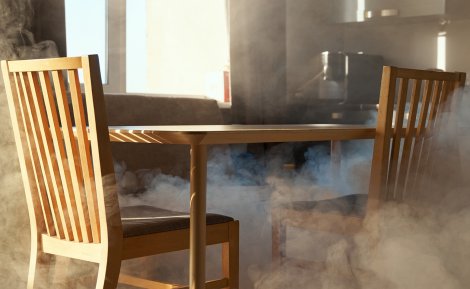
In January 2025, dozens of wildfires ripped through Los Angeles in a way no one could have imagined. We all spent the week in front of televisions waiting to see which direction the winds would take the fires. Those not forced to officially evacuate had bags ready to go in case a new fire flared closer to home. And while the City braced for decades of rebuilding efforts, the insurance coverage attorneys waited for the inevitable coverage disputes to begin.
The initial response to the wildfires was not likely to generate disputes between the insurers and insureds. According to data from the California Department of Insurance (DOI), as of January 30, 2025, out of 31,210 claims related to the fires, 14,417 were immediately partially paid to the tune of $4.2 billion. Within a week, by February 5, 2025, the number of claims increased to 33,717 with 19,854 partially paid in the amount of $6.9 billion.1
During this time, insurers were following their modified obligations under the California Regulations given the DOI’s emergency declaration of January 9, 2025, which imposed certain additional obligations on the insurers for a total loss:
While the total-loss claims were not going to spark much controversy, it was only a matter of time before the smoke damage claims ignited and the insurance world incurred an onslaught of coverage disputes.
Legal Decisions Regarding Smoke Damage
The question of whether smoke damage constitutes “property damage” is an ongoing issue in California. The matter was litigated heavily during the COVID-19 pandemic where businesses frequently claimed “property damage” from the virus. Courts in California generally found that COVID-19, without more, did not constitute “property damage.” Another Planet Entertainment, LLC v. Vigilant Ins. Co., 15 Cal. 5th 1106, 1117 (2024). In the weeks following the start of the 2025 wildfires, two decisions came down in California addressing coverage for smoke damage arising out of earlier fire events.
These decisions leave California insurers unclear as to whether smoke damage constitutes “property damage” sufficient to trigger coverage under homeowners and commercial policies. In finding coverage, the Bottega court said the insured made some undefined “partial/temporary repairs” to the property after the nearby wildfire, which may have factored into the ultimate decision that “property damage” existed. Bottega, 2025 U.S. Dist. LEXIS 5666 at *4. In declining coverage, the Gharibian court dealt with a situation where the ash could be wiped from surfaces with no permeating smell of smoke and no referenced repairs. Gharibian, 108 Cal. App. 5th at 733. Given this conflicting precedent in California, what are insurers expected to do?
DOI Guidance
On March 7, 2025, the DOI provided guidance through Bulletin 2025-7,2 which sets forth the DOI’s “expectations with regard to how insurance companies process and pay smoke damage claims as a result of wildfires, including the recent Southern California wildfires.” The DOI’s Bulletin explicitly states that the “recent cases do not support the position that smoke damage is never covered as a matter of law.” (emphasis in original). The Bulletin reiterates the need for a full investigation into each smoke damage claim and states, “[i]t is not reasonable to deny a smoke damage claim without conducting an appropriate investigation, nor is it reasonable for the insurer to require the insured to incur substantial costs to investigate their own claim.” The DOI advised it would monitor insurers’ responses to such claims.
Conclusion
Ultimately, and consistent with the DOI Bulletin, the coverage evaluation will likely turn on a case-by-case basis, looking at the scope of damage to the insured and the physical alteration of the property. Absent the lack of a physical loss, smoke damage is usually not excluded by other provisions in the policy.3
Our best advice? Insurers are encouraged to continue to actively investigate these claims and be diligent throughout the claims handling process. To that end, insurers should hire experts where needed and push for information from the insureds as necessary to complete the claims investigation. Insurers also must be mindful of the growing anti-insurer sentiment in Los Angeles (regardless of the billions already paid on claims). We anticipate the litigation following these latest wildfires will provide new insight on whether smoke damage constitutes “property damage” to trigger coverage.
_______________________________________________________________________________________________
1 https://www.insurance.ca.gov/01-consumers/180-climate-change/Wildfire-Claims-Tracker.cfm.
2 https://www.insurance.ca.gov/0250-insurers/0300-insurers/0200-bulletins/bulletin-notices-commiss-opinion/upload/Bulletin-2025-7-Insurance-Coverage-for-Smoke-Damage-and-Guidance-for-Proper-Handling-of-Smoke-Damage-Claims-for-Properties-Located-in-or-near-California-Wildfire-Areas.pdf.
3 Other jurisdictions have held that smoke damage is not precluded by pollution exclusions. Kent Farms, Inc. v. Zurich Ins. Co., 140 Wn. 2d 396, 400 (2000); Allstate Ins. Co. v. Barron, 269 Conn. 394 (2004).

© 2026 Wilson Elser. All Rights Reserved.